Lowet Lab
Understanding circuits,
improving therapies
We study how neurons and circuits coordinate their activity during behaviour, using voltage imaging, electrophysiology and computational analysis. A central aim is to understand how deep brain stimulation restores circuit function in conditions such as drug-resistant epilepsy and Parkinson's disease.
Department of Neuroscience · Erasmus MC · Rotterdam, the Netherlands
We study how neurons communicate during behaviour, and how brain stimulation can restore that communication in disease.
An interdisciplinary team using voltage imaging, electrophysiology and computational analysis to understand neural circuit communication and the mechanisms of deep brain stimulation.
Research directions
Two questions we focus on
How seizures emerge and spread across cells, regions and time
In drug-resistant epilepsy, we track single-cell and population voltage dynamics across different neuronal cell types and brain regions, and across multiple timescales — within individual seizures, across successive seizures, and over the course of epileptogenesis. To do this we combine multimodal recordings — voltage imaging, electrophysiology, locomotion kinetics and behaviour — to follow how normal circuit communication breaks down.
Read more →How deep brain stimulation acts on the basal ganglia
Deep brain stimulation is a powerful therapy for Parkinson's disease whose mechanism is still poorly understood. We study how stimulation, from conventional to kilohertz frequencies, reshapes activity in the basal ganglia circuits affected in the disease, from single-cell responses to population dynamics. We combine multimodal recordings — electrophysiology, locomotion kinetics and behaviour — working toward more precise and effective stimulation.
Read more →Approach
How we do it
Behaving animals
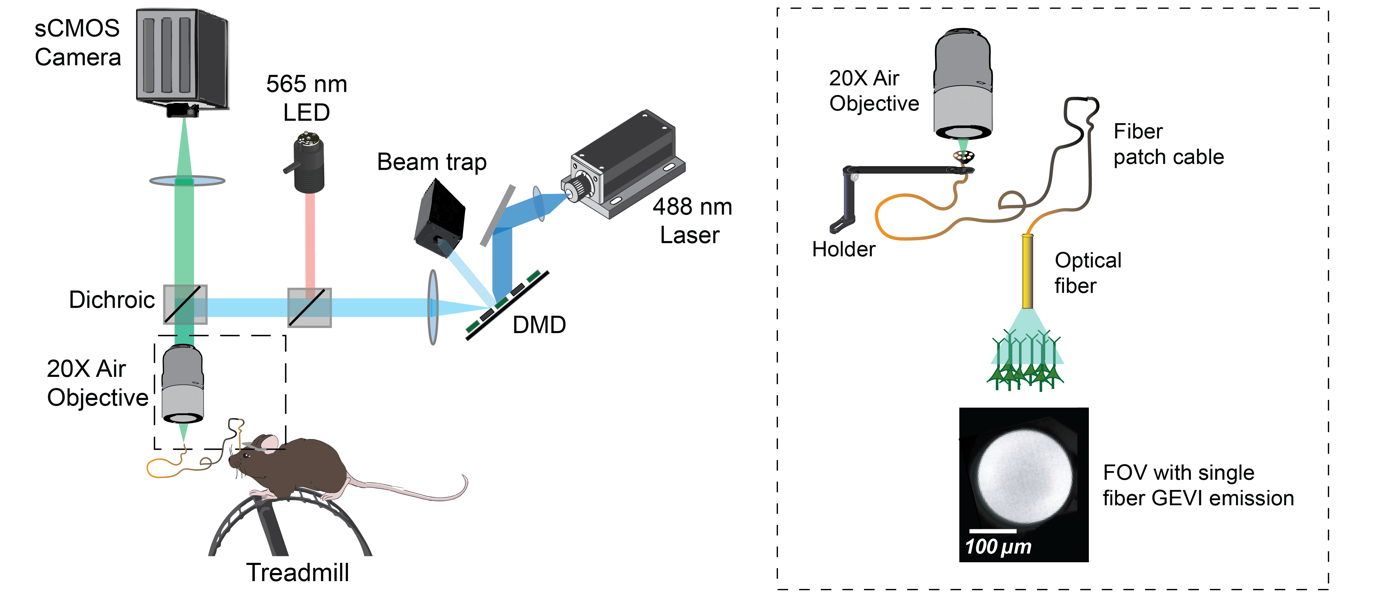
Recordings in freely moving and head-fixed mice, linking circuit activity to what the animal is doing.
Voltage imaging
Genetically encoded voltage indicators read membrane potential optically — spikes and subthreshold dynamics at millisecond resolution.
People
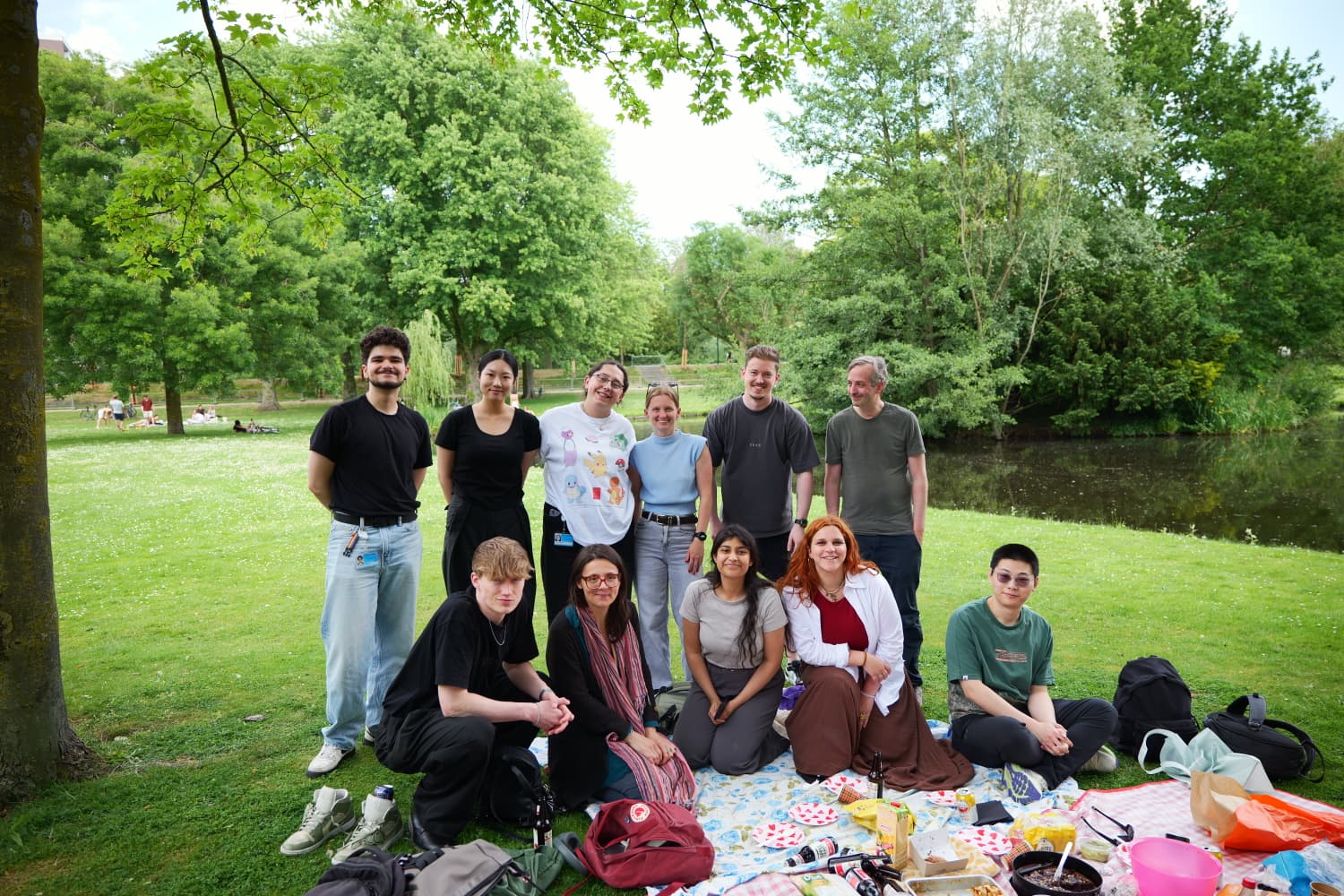
A curious, interdisciplinary team
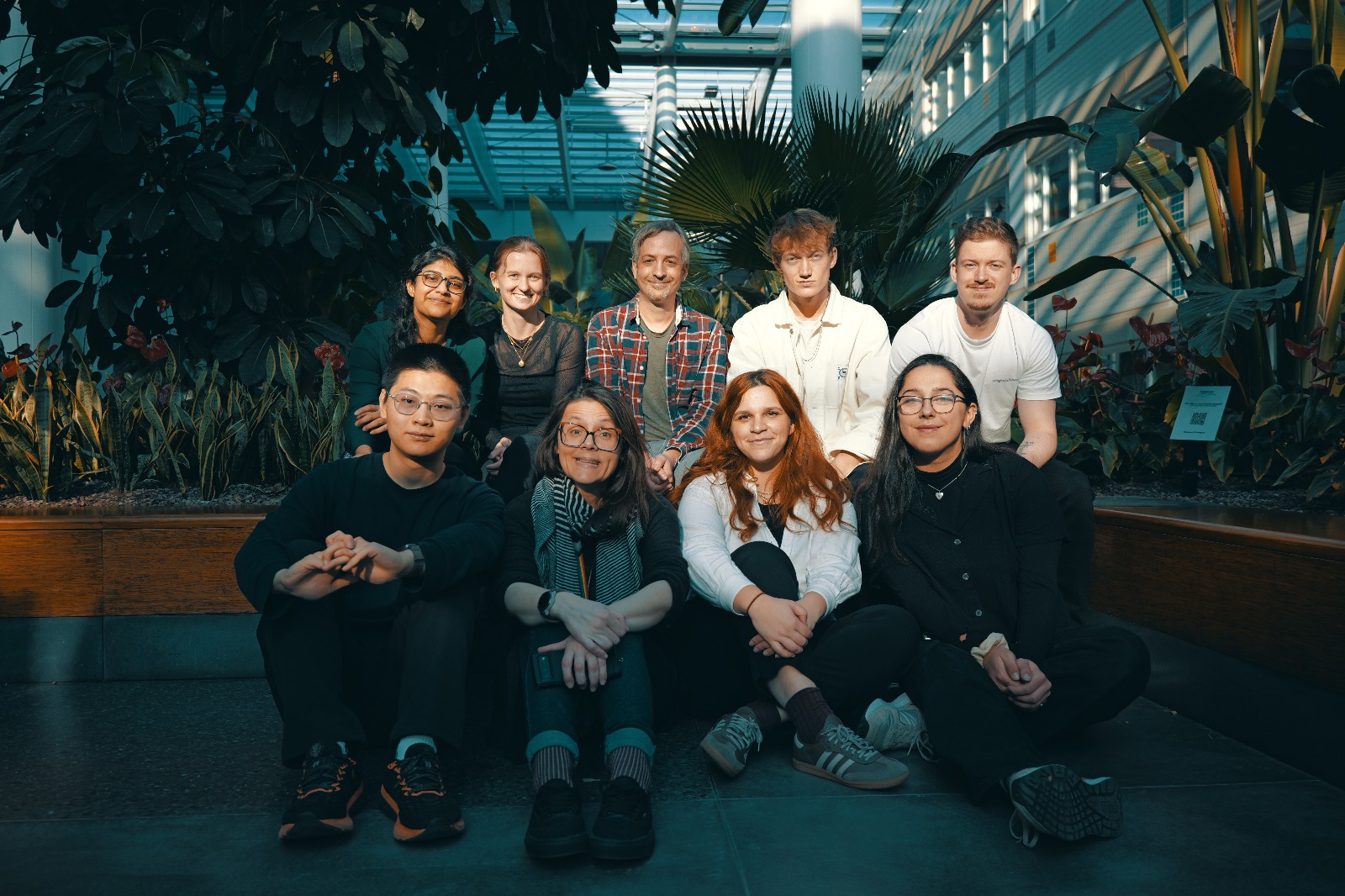
Biologists, physicists and engineers working together across voltage imaging, electrophysiology and computation — based in the Department of Neuroscience at Erasmus MC, Rotterdam, the Netherlands.
Meet everyone →Life in the lab
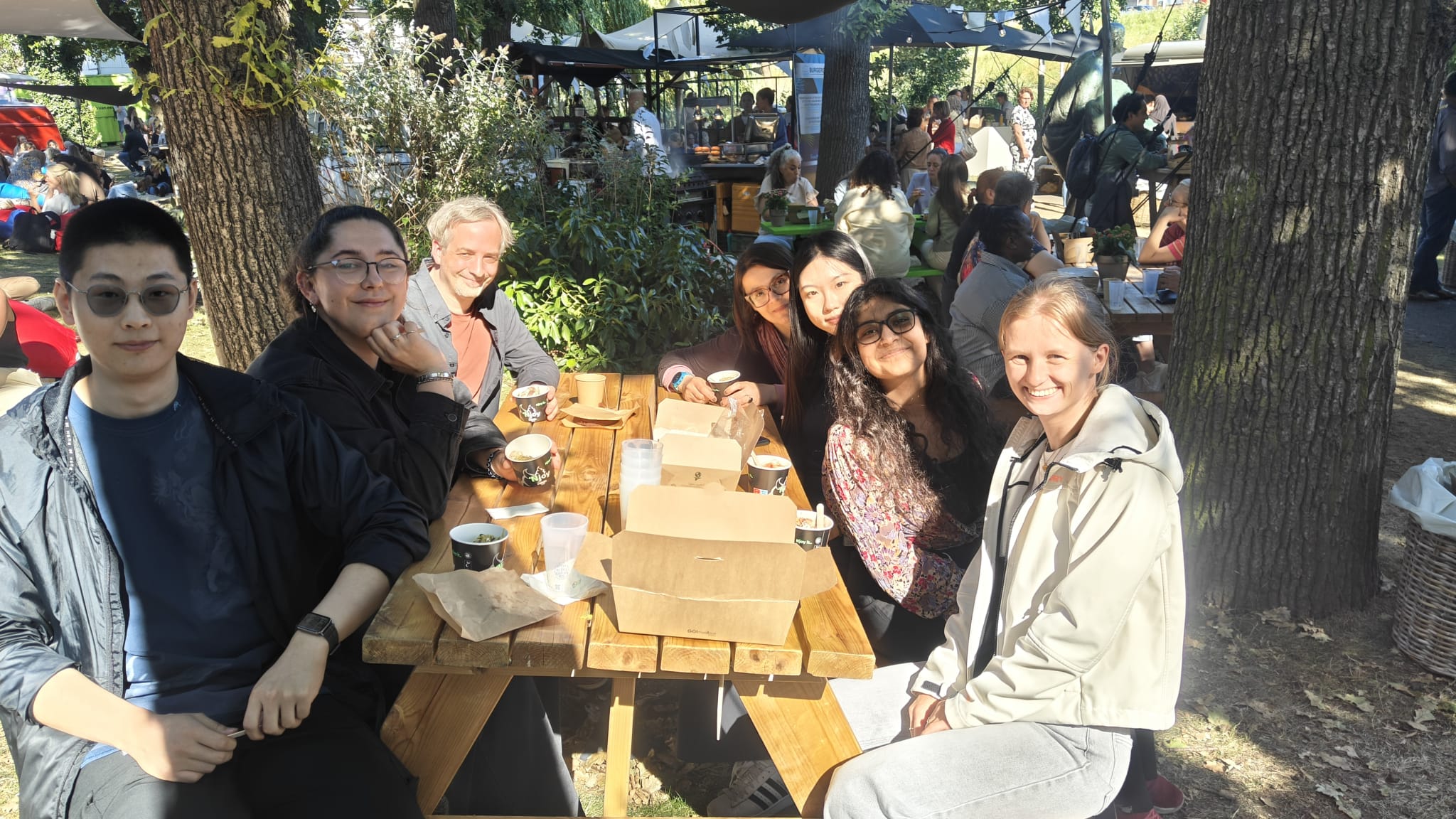
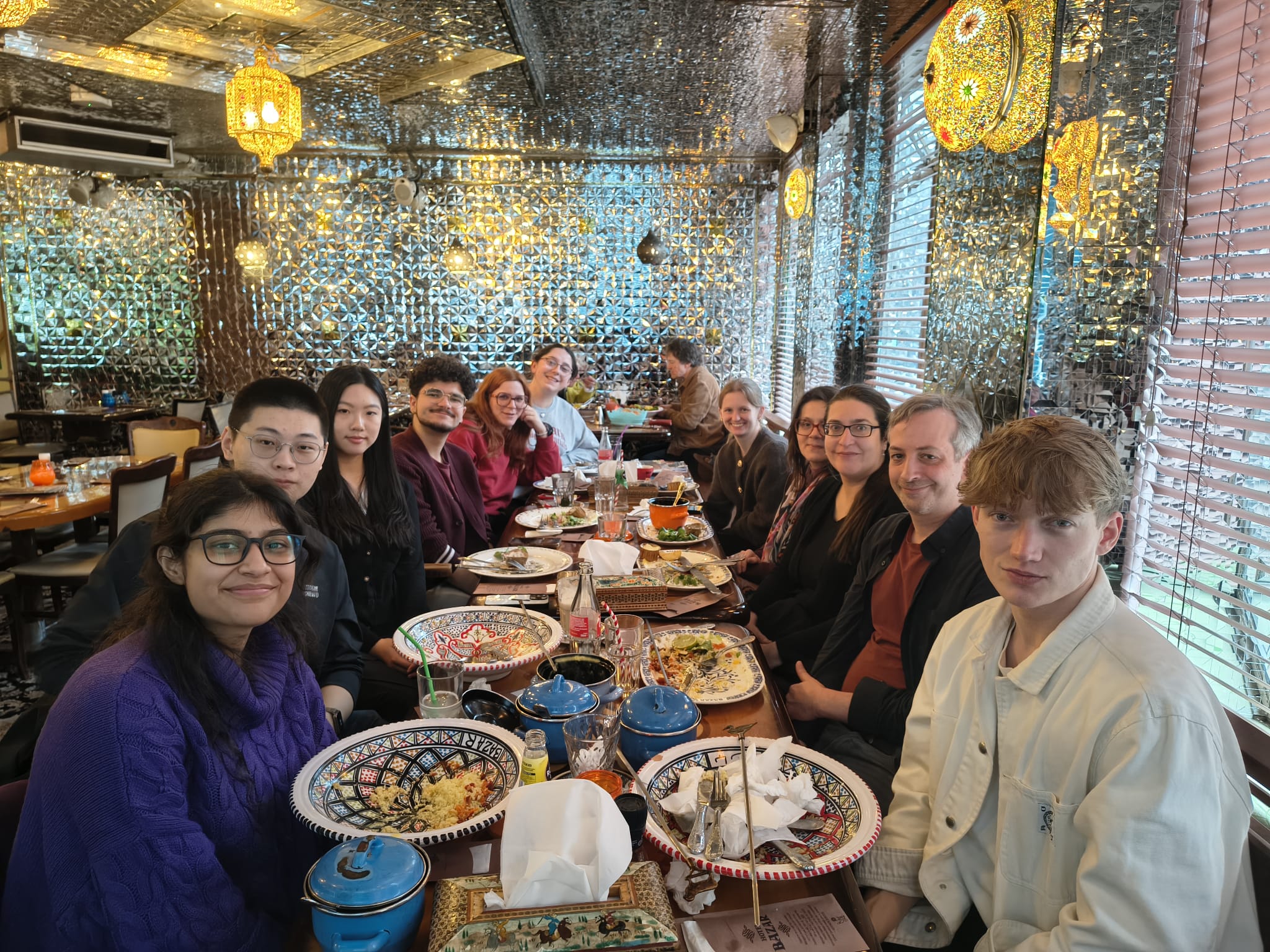
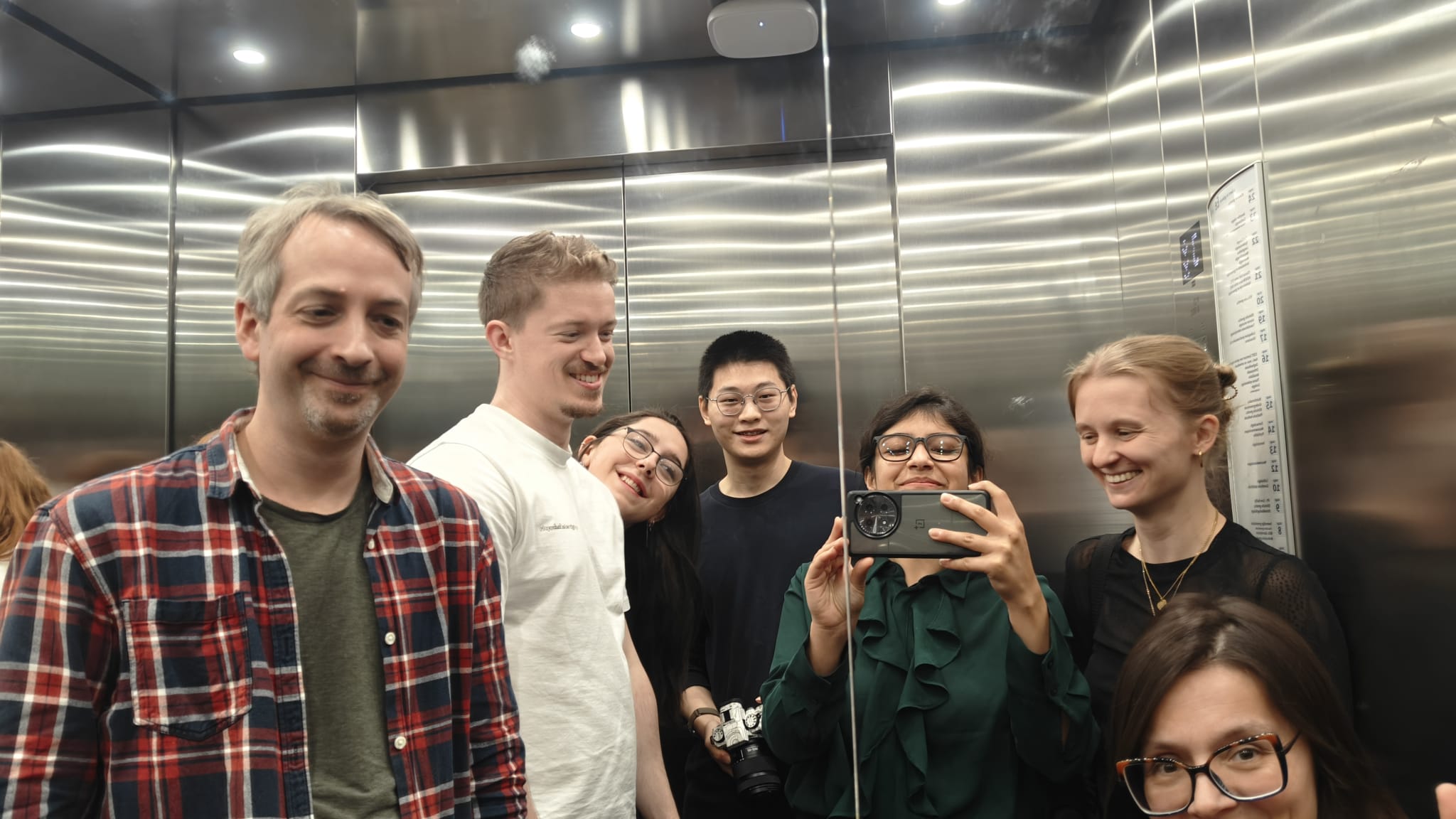
Beyond the microscope
Featured publication
Tracking multi-site somatic voltage dynamics via high-speed fiber photometry
Sukanya Chakraborty, Maxime van Veghel, Athanasia Tzanou, Zhongyi Li, Denis Torbin, Eric Lowet · bioRxiv · Preprint
News
Latest from the lab
New preprint on fiber-photometry voltage imaging
Our method for tracking multi-site somatic voltage dynamics via high-speed fiber photometry is now on bioRxiv.
Welcome to our new master students
Several new master students joined the lab this spring to work on voltage imaging and deep brain stimulation projects.
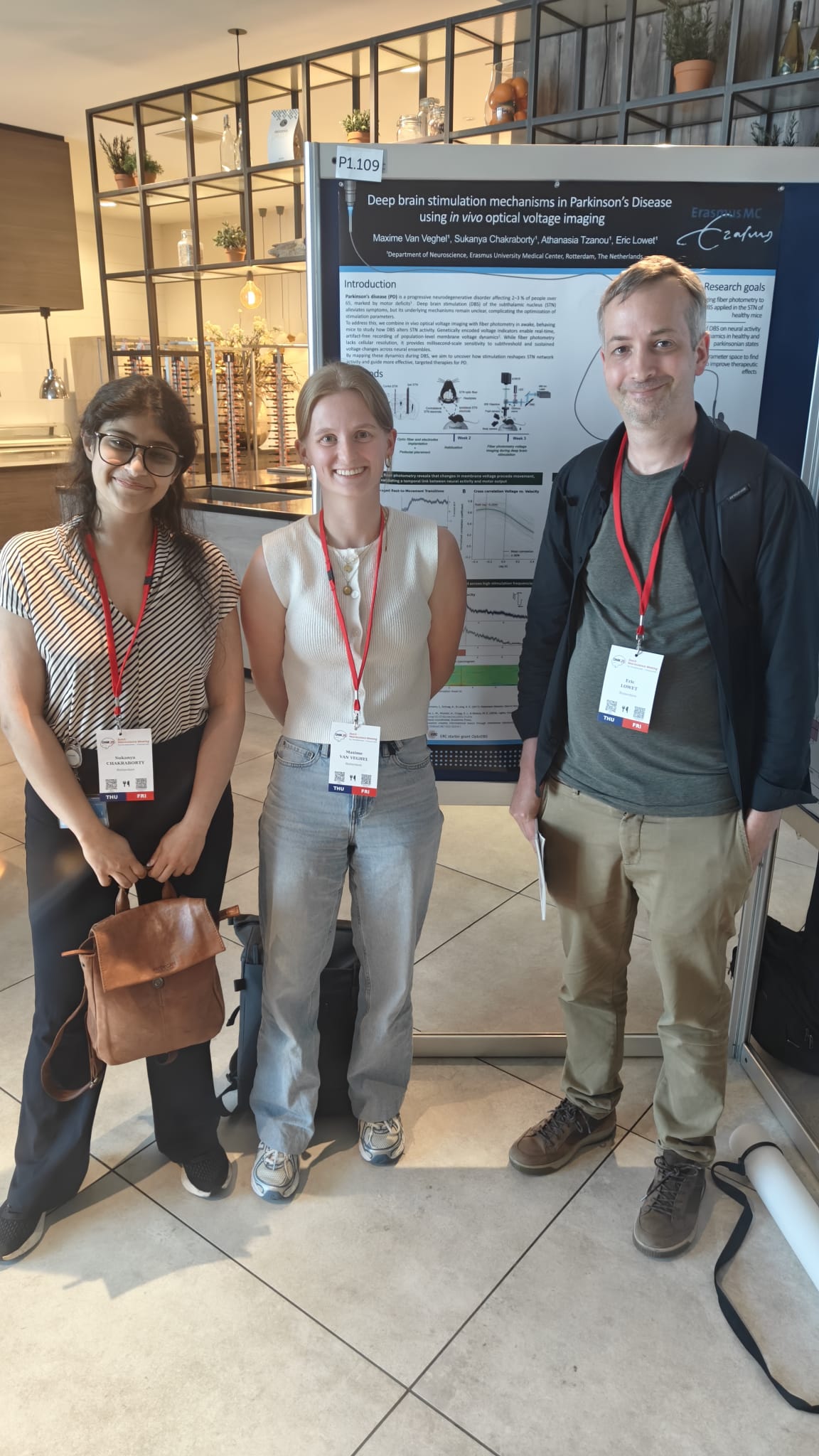
Lab presents at the Dutch Neuroscience Meeting
Members of the lab presented recent work at the 2026 Dutch Neuroscience Meeting.
Support & collaborators
Join the lab
We welcome curious students and researchers in neuroscience, physics and engineering. PhD, MSc and internship opportunities.
See open positions